
The Watch You Buy When You Stop Trying to Impress People
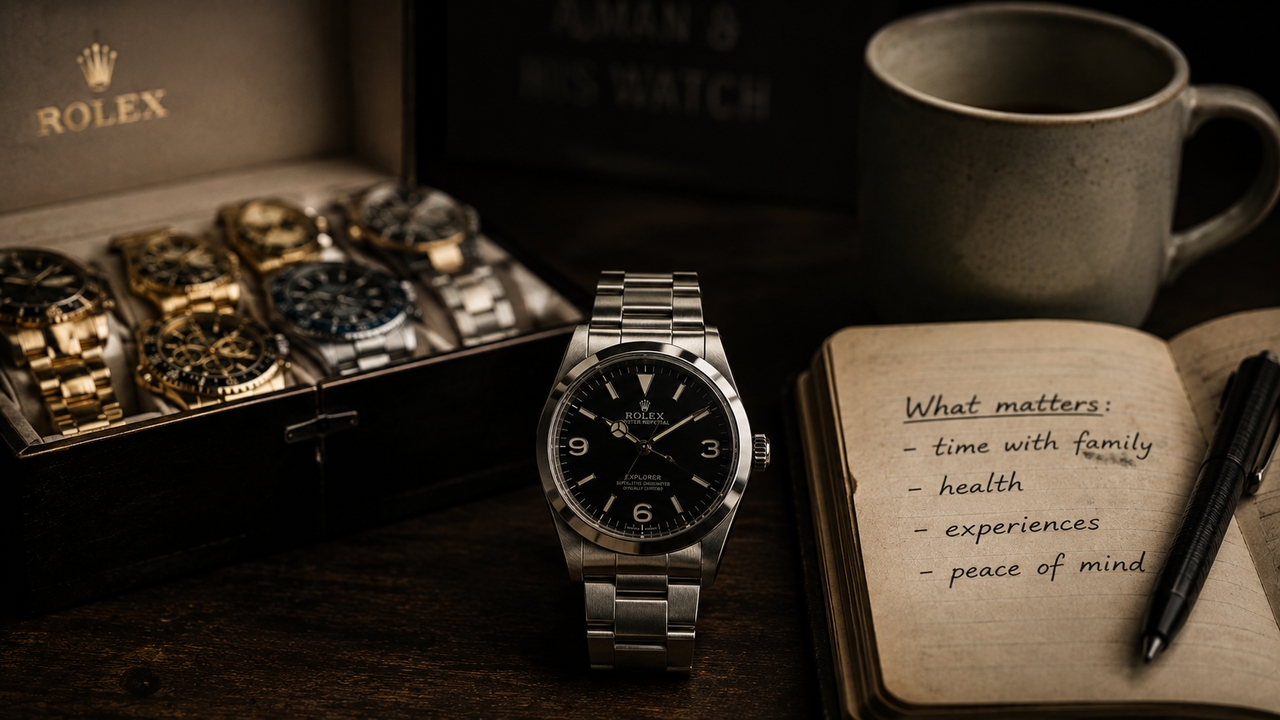
Collectors often start at a point where they already know other watch enthusiasts. They know what brands people wear. They know the references other collectors recognise. They understand the subtle signals exchanged when someone spots a rare complication or vintage model across a crowded room.
Being able to speak that language is part of the fun. Watches are social objects.
But after a while, many collectors reach a point where they no longer care about displaying those signals on their wrist.
The moment a collector stops trying to impress people with their watch is a meaningful one.
When Taste Stops Trying to Impress Others
Most collectors eventually reach a point where recognition becomes important. They realise there’s a particular subset of watches that other enthusiasts will recognise when they walk into a room. They start learning the references they want people to know they know.
There’s nothing wrong with that.
But those signals of recognition aren’t always the ones that point towards the watches they actually want to wear every day.
Early in a collector’s journey, a watch can seem more appealing when it carries some of that recognisability factor. If a watch is technically interesting, historically significant and easy to explain to another enthusiast, it can be more satisfying to own.
Part of that is simply pride. Of course collectors enjoy watches that other people understand and appreciate too.
The reality is that the most recognisable watches aren’t always the ones a collector looks forward to putting on.
Someone can admire the shared knowledge behind a watch’s design and history and still find themselves wearing the same watch that was buried under their other clothes last week.
This is the point at which collecting becomes about the collector.
The Watch That Fits the Wrist More Than the Lifestyle
When a collector lets go of their ego, other things become relevant.
They start to care about aesthetics of how a watch sits on the wrist more than how blinged out it is. They appreciate delicate details on a dial that others simply won’t notice. They may start to like movements based purely on preference instead of whatever’s popular.
They find subtleties of happiness.
Mechanical watches with minuscule screws they can run their thumb over. Watches with sweeping, smooth hands that seem to glide effortlessly across the face. Watches that aren’t as loud visually, but for some reason speak more.
The watch a collector eventually gravitates towards probably isn’t going to turn many heads.
In fact, it might not be what they expected to want when they first started collecting.
Collecting Watches Becomes More Personal
One of the joys of watching a collection grow over the years is seeing a collector’s tastes naturally become more specific.
At first, the categories can be broad. Vintage watches. Chronographs. Dress watches. Independent makers. Certain brands within those larger groupings.
As collectors spend more time with watches, they start caring about subtler details. Things they didn’t know they cared about until they saw them and understood how much they appealed to them.
The curve of a crown.
The way dust catches in the crevices of a texture-coated dial.
A particular shape of handset. The feel of a crown when setting the time. The way a case sits against the wrist.
The collection becomes its own.
It becomes a representation not of what the collector is supposed to own, but of what they notice and care about.
Quiet Confidence
There is something satisfying about reaching the point where a collector no longer feels the need to apologise for the watches they own.
Early in a collecting journey, it can be tempting to overexplain a favourite watch. The movement architecture. The history of production. What makes the design significant.
Those things can be fascinating to explore.
But eventually, a collector may buy another watch simply because they like it.
Not because it has an impressive movement. Not because it has historical significance. Not because another collector will recognise it across the room.
Just because they like it.
Collections begin to mirror their collectors. Perhaps that is one of the lovely aspects of growing older and becoming comfortable with the idea that sometimes a person just likes what they like.
Some people like hockey.
Some people like vintage dress watches with tiny movements that nobody else notices.
Both are perfectly valid.
They Like Watches
And that’s okay.
The watch a collector buys once they stop trying to impress people probably won’t be the most flashy thing in their collection. It won’t necessarily be the rarest or most expensive.
It will just end up being your favourite watch. The one you reach for when there is nobody in the room and you’re wearing that shirt that rolls up clean on your wrist.
There’s a confidence in owning pieces you love and wearing a watch because you want to wear it, not because the room expects it on your wrist.
When you stop worrying about someone else’s opinions, that’s when watches start to become more than just a status symbol.
After that watch you buy because you don’t care who knows, the watches you purchase start to mean something more. They become less about the others opinions and more about yours.
The watch you buy when you don’t give a damn about impressing someone else is usually the one you wear all the time for one reason.
You simply want to.
Enjoyed this article?
Members of The Collectors Club have access to the full editorial archive, private introductions, and a community of serious collectors.
Apply for Membership