
The Collectors Who Buy to Complete a Historical Narrative, Not a Personal Wishlist
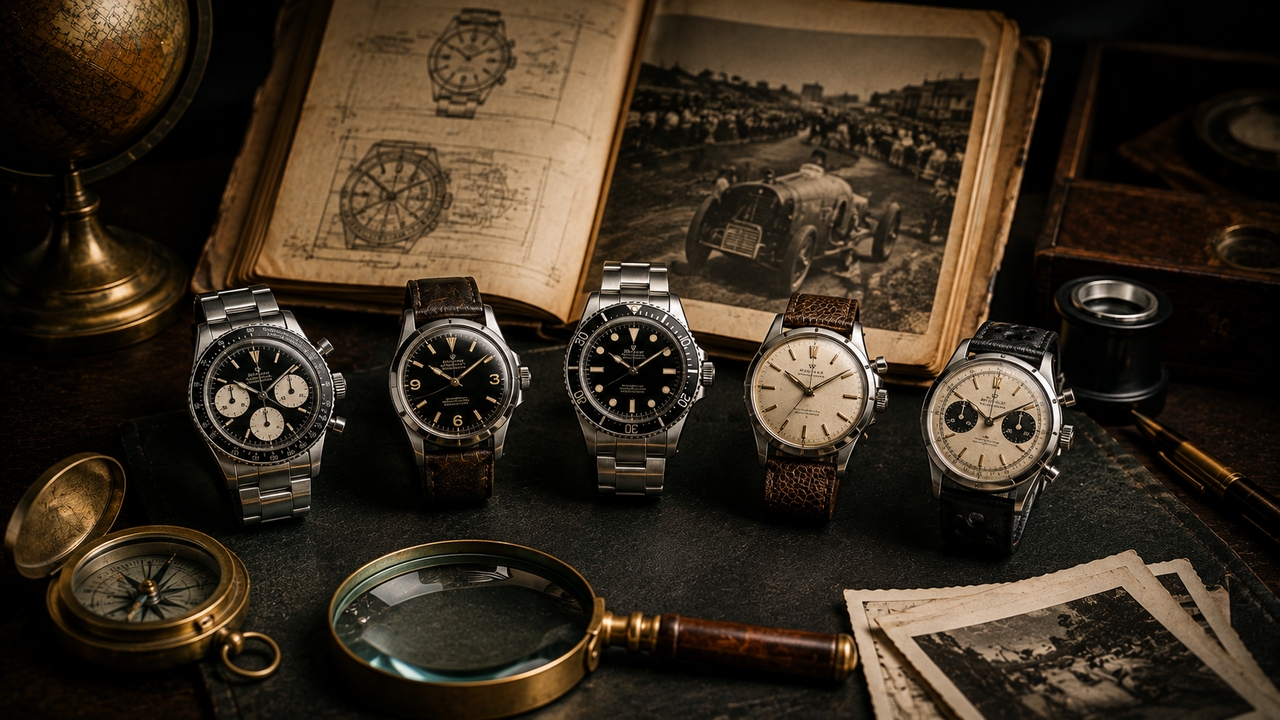
Collectors whose ultimate goal is building a historical timeline can often find themselves admiring watches that don’t necessarily appear on everyone else’s wishlist.
There comes a point in every serious collector’s journey when a watch stops being an interesting timepiece simply because you want it. Where it fits into a bigger picture starts to matter more.
A Collection With a Story
Take one look at the amazingly complete history Lou Cornolti has built around Universal Genève and you’ll know what we mean. Sure, he has plenty of watches that are desirable for reasons beyond their historical significance, but his collection is defined by the story it tells.
That doesn’t just apply to museum-quality pocket watches from lesser-known manufacturers.
Chronographs, dress watches, military watches, novelty pieces: as long as they fill a gap in the chronology, they have a place in Lou’s collection.
We Love It When Watches Start Asking Questions
Most watch collections grow organically. You see something you like, look it up, maybe save up for it, and once you’ve got it, start doing the same thing all over again with the next watch that catches your eye.
But after a while, you’ll notice that certain themes begin to emerge. Maybe you find yourself collecting multiple watches from the same era. Maybe you start to notice that a handful of watches in your collection are powered by variations on the same movement.
Before you know it, those watches are starting to ask questions.
Where did this reference come from? Why was the design changed? Was this movement really brand-new, or an iteration of an existing design? What happened to this model next?
As your collection grows, you’ll start to find yourself seeing gaps in a story that you can fill by acquiring new watches.
Rather than thinking, “What watch do I want next?” you start thinking, “What don’t I have?” and “How can I fill this gap in my collection?”
Those questions change your collecting priorities.
The last piece of the puzzle can suddenly become the most interesting watch you don’t own.
Unless you’re lucky enough to find a complete collection of every watch your favorite brand ever produced, which, let’s be honest, is extremely unlikely, there are going to be holes.
You might have watches that illustrate the beginning of a movement’s development perfectly, but not what happened between version A and version B.
Suddenly, that obscure reference you never would’ve considered becomes more interesting than that ultra-desirable watch you’ve been eyeing up for months.
When you’re focused on building a historically significant collection, surprises like that are what keep you hunting.
Making Connections
The deeper you get into this kind of collecting, the more you learn about research.
There are brand catalogues, which can show you how manufacturers wanted their watches to be perceived at the time they were produced. Ads from the era can show you how the watches were actually sold to consumers.
Photos, service records and old articles can also be helpful. Not to mention original sales receipts, manuals and any surviving examples you can get your hands on.
Worse comes to worst, there are always forums like this one where watch aficionados love discussing the minutiae of their favorite brands with anyone who shows an interest.
You cross-reference all of these sources with the watches you actually own.
Did the brand really produce this reference in all of the variations listed in the catalogue? Was that dial really only used during that specific year?
You start to see these things because you care about the bigger picture. Details that would otherwise mean nothing to you suddenly become fascinating.
Your Watches Become More Than Just Things to Admire
When you’re hunting for the missing piece of your collection, your watches start to become a lot more than just shiny objects to admire.
They become physical evidence to study.
There Will Always Be Another Watch You Want
Let’s get one thing clear. You’re not going to stop wanting watches.
If you’re like us, watches will always be your hobby. You’ll always see something new and think, “I need to own that.”
Building a collection based around historical significance doesn’t change that. It just means your Wishlist will become more refined.
That Coveter VS78 you’ve had your eye on? Sure, it’s a sexy watch. But you don’t need it.
You want it, sure. But unless it fills a missing gap in your collection, there’s a strong chance you’ll eventually look past it and continue searching.
The exact opposite can happen with something far less desirable.
Maybe you already own watches that span the development of a movement from beginning to end.
You don’t need that ToPD to complete your collection, but it fills a missing gap that no other watch does. Suddenly, it becomes just as desirable as that covetable watch you’ve been drooling over for the past six months.
Watch Collecting Is About a Lot More Than Wanting
That’s not to say that everyone should be out there trying to build the most complete collection of every watch brand ever created.
There’s nothing wrong with collecting watches because you like them. If you’re happy, we’re happy.
Think of it this way.
When you build a collection based on personal taste alone, the watches in your collection are probably talking to you.
They’re asking you questions about the gaps in their story.
You just might not realize it yet.
Enjoyed this article?
Members of The Collectors Club have access to the full editorial archive, private introductions, and a community of serious collectors.
Apply for Membership